





Travelers face an array of potential threats while staying at hotels such as break-ins, fires, natural disasters and terrorist attacks. Here are some guidelines you can follow to ensure your safety when staying in hotels.
Before you go
- Make your hotel reservations via Trips so that the Firm is better able to assist you when unexpected situations occur.
- If we do not know where you are, we are not able to contact or assist you.
- When booking hotel rooms through a convention bureau or other similar group for a convention, trade show or other special meeting, be sure to forward the pertinent information to the company travel agency to be included in a single itinerary.
- When packing, think “long term.” Extra batteries, medication, clothing, maps, etc. Buy a small flashlight and bring it with you.
- Jewelry and valuables should be insured if you are going to travel with them.
- Leave a copy of your business itinerary (flights, hotels, contact numbers, etc.) with your spouse, family member, or trusted neighbor.
- If traveling abroad, make sure that there is English speaking staff available 24/7.
What to look for in safe hotel
- Verify that hotel is in a low-crime area.
- Look for a monitored single entry to the hotel after hours.
- All interior hallways, parking structures, and grounds should be well-lit.
- Security escorts should be available to rooms and car when requested.
- Verify that there is a dead bolt lock and peephole.
- Make sure all windows and adjoining doors can be secured.
- There should be fire sprinklers and smoke detectors in all hotel rooms and hallways.
- Each room telephone should allow outside dialing.
Parking
- Park as close to the entrance to the hotel as possible.
- Avoid walking alone in hotel parking lots at night. Ask for security to escort you to your car or use valet service.
- If you valet park your car at the hotel, check that your room number is not visible on the valet ticket displayed in your car.
- Do not leave valuables in your vehicle.
- When approaching your car, always have keys in hand.
- Women should keep purses close to their bodies not loose around or dangling off a shoulder.
- Keep it in front of you with a hand on top of it.
Arrival and Check-in
- When you arrive at the hotel, take a few moments to become familiar with your surroundings.
- Always stay with your luggage and keep a close eye on your belongings.
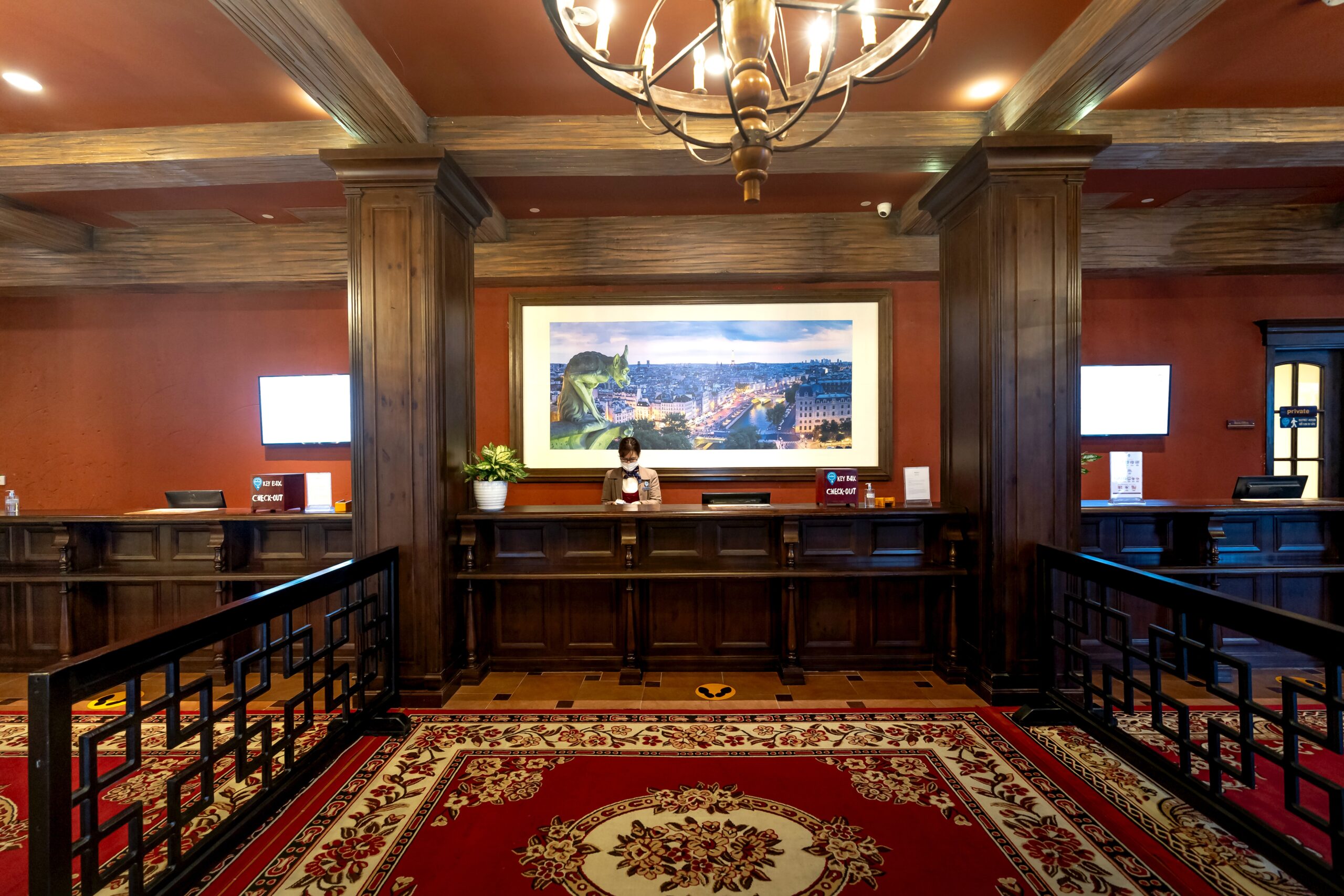
- When registering, sign only your last name and first initial.
- Front desk staff should NOT verbally announce your room number. If they do, ask for a new room.
- Then ask them to write the number down rather than say it out loud.
- Disabled travelers should inform the front desk upon arrival of any special needs.
- Don’t leave your credit card lying on the counter while you complete your registration.
- Instruct the desk not to give out your name or room number and ask for them to call you if someone inquires about you either by phone or in person.
- Get two business cards, matchbooks, brochures, or pieces of stationary with the hotel name and address on them. Place one by the phone in your room and keep the other with you.
Requesting a room
- Request a room above the second floor but below the sixth floor to reduce the risk of exterior entry and to avoid entrapment by fire.
- Whenever possible do not accept a room on the ground floor that has doors and windows that open directly to the outside, especially those that face the parking lot.
- If traveling with coworkers, request rooms near each other. Know your coworkers’ room numbers and how to reach them using the local phone system, cell phones, etc.
- Guestrooms that are close to the elevators are safer than remotely located rooms. Rooms closest to an emergency exit / stairway provide the quickest exit in the event of an emergency.
Arriving at your room
- When you enter your hotel room, make sure the door closes securely and that the lock and deadbolt work.
- Keep the deadbolt and safety bar on at all times.
- If the room does not have a deadbolt or heavy-duty security clasp but does have a chain, twist the chain to take up the slack before latching it.
- Check the closets and bathrooms.
- Examine locks on the room entrance door, windows, and adjoining and balcony doors to be sure they are functioning properly.
- Check that the phone is operating and you know how to make an outside call. Write down the extension for hotel security as well as the number for dialing outside emergency. (Do you need to dial an additional “9” to get an outside line before dialing 911?)
- Hotel Security is your primary resource. Report any concern or incident to the hotel security staff immediately.
During your stay
- When you leave your room, make sure the door closes securely behind you.
- When you are out, place a “Do not disturb” sign on the door.
- Always use the room safe to secure all your valuables. Don’t forget to empty the safe before leaving
- Never leave your door open, even if you are just running down the hall to the ice or vending machines.
- Do not answer the door without verifying who it is. If you do not recognize the person, call the front desk.
- If you have not called hotel service to your room, do not let anyone identifying themselves as hotel service into your room. Notify hotel staff at once. Get the employee’s name and call the front desk to verify they legitimately need to access your room.
- Be aware of your surroundings and always report anything suspicious.
Public Areas of the Hotel
Restaurants & Lounges
- Do not reveal personal information to strangers.
- Keep your briefcase or purse visible at all times.
- Do not display anything that has your room number visible.
- Be wary of any stranger that follows you to a restroom.
Elevators
- After hours, women may want to consider requesting a security escort to accompany them to their hotel room and check it for intruders.
- Be observant of all strangers, especially elevators. If someone suspicious boards an elevator, exit as soon as possible.
- It is wise to board elevators last and select floor buttons last.
- Stand near the elevator control panel and keep your back to the side wall. Push as many floor buttons as possible if threatened or attacked.
All Areas
- Be aware at all times of your surroundings and any strangers. Be as vocal as possible if confronted or threatened, and proceed ASAP to a public area that is staffed by hotel employees or where there are other guests. Report the incident immediately to hotel security.
- Do not visibly display or verbally reveal your room number in any way in a public area. Be especially careful with a key that may have your room number printed on it, or when charging items to your room in a gift shop or health club.
Hotel Evacuation Kit
Keep the following items on or near the nightstand, next to your bed:
- Eyeglasses
- Smart phone
- Room key
- Wallet
- Passport
- Small flashlight
- Deloitte Emergency Procedures Card
- Shoes
- Prescription medication
- Paper with hotel security extension
- Outside emergency phone number
- Emergency exit information written down.
- You can keep the items in the hotel room’s plastic valet laundry bag for easy carrying in the event of an evacuation.
Fire Safety
While major hotels are equipped with smoke alarms, sprinkler systems and emergency evacuation instructions, fire safety awareness will increase your chance of survival in the unlikely event of a hotel fire.
- IF YOU DISCOVER SMOKE OR FIRE call 911 or pull the fire alarm. Exit the hotel via the emergency exits if possible.
- IF THE FIRE ALARM SOUNDS, put on your shoes, get your EVACUATION KIT and head for the door. If there’s any smoke in your room, crawl. The fresh air you need to survive is near the floor.
- A wet towel tied to cover your nose and mouth is an effective filter if you fold it in a triangle and put the bottom corner in your mouth.
- Feel your door before proceeding into the hallway.
- IF THE DOOR IS HOT OR SMOKE IS COMING IN do not open the door. Fill your bathtub with water and use wet towels to block the opening underneath the door.
- Open your window only if smoke is not entering your room. If smoke is not entering your room, hang a sheet out the window to signal firefighters.
- If there is fire outside, do not open the window and move everything combustible away from the window.
- Dial 0 to reach the operator. Tell them your room number and number of people in the room.
- If doors and walls are hot, throw water on them with your ice bucket to keep them wet.
- Never jump from the third or higher floor. Chances of survival are greatly reduced.
- IF THE DOOR IS COOL, open it cautiously and stand behind the door as you open it. Be prepared to close it quickly if necessary.
- If the hallway is clear, refer to the evacuation instructions on the door, exit, close the door behind you and proceed to the nearest exit. If the hallway is filled with smoke, crawl to the nearest exit. Stay against the wall to count the doorways to the exit.
- Use Stairwells. Never use elevators. If you encounter heavy smoke, go up to the next floor and use an alternate stairway.
Tornado Safety
- Be aware of National Weather Service Advisories, by tuning in to local TV or radio stations. Keep abreast of weather conditions outside.
- Tornado Watches – severe weather conditions that are favorable for tornadoes.
- Tornado Warnings – tornadoes have either been spotted rotating in the air or have touched down on the ground in the area.
- Sometimes tornadoes develop so rapidly that advance warning is not possible. Some of the signs of an approaching tornado include: a dark, often greenish sky, a wall cloud, large hail or a loud roar similar to a freight train.
- In the event a tornado is sighted or a tornado warning is issued, seek shelter immediately. Stay away from windows and doors.
- Follow instructions provided by hotel staff via the public address system, or otherwise. If no instructions are provided, dial “0” and ask the hotel operator.
- If you have time, you should go to the designated location assigned by the hotel for emergency shelter; typically this will be a lower floor area without windows (stairwells, interior office, meeting room, etc.)
- If times does not permit you to go to this location, immediately close the drapes, take a pillow or blanket from the hotel room, and crouch down in the hallway, your bathroom with the door closed, or take shelter under a heavy piece of furniture. Most injuries from tornadoes are from flying debris.
- Do not attempt to leave the hotel or drive in your vehicle until the weather emergency has passed.
Earthquake Safety
- Stay calm. Do not run outside. You are safer inside the hotel.
- Duck, Cover & Hold
- Duck under a sturdy desk or table.
- Cover your head and as much of your body as you can.
- Hold onto the table; if it moves, remember to move with it, keeping yourself covered as you go.
- After the earthquake, do not rush out of your room or the hotel. Wait for instructions over the hotel public address system. If you feel that you must leave for your own safety, use the stairways. Do not use elevators.
Bomb Threats
Follow instructions from the hotel staff. Bomb threats are created to cause panic, not harm. Law enforcement MAY evacuate a portion of the building or area depending on the information they have from their intelligence-gathering process. Full or partial evacuation is partially decided on the structure of the building, type and size of explosive device, placement of the device, law enforcement’s ability to safely remove the threat, and the threat posed to the occupants in the building.
General Instructions for Emergency Evacuation
- Hotel security staff will determine whether it is safer for guests to remain in their rooms, move to a specific area of the hotel, or to evacuate.
- Listen for announcements over the hotel’s public address system to provide you with instructions on the evacuation procedure and where the meeting point will be located, inside our outside of the building.
- IF EVACUATING
- Remain calm, follow instructions, and proceed quickly.
- Bring your EVACUATION KIT mentioned above.
- Close your guestroom door and check that it is locked behind you.
- ALWAYS use stairwells. NEVER use an elevator during an emergency situation.
- Proceed to the designated meeting area. Consult with officials to assess the safety of that area.
- IF REMAINING IN YOUR ROOM
- Turn on the television to a local station, if the emergency is local, to bring yourself up-to-speed with the situation.
- National broadcast stations such as CNN or CNBC may be better choices if it is an international or national crisis.
- Use your instincts to guide you through this period of time. Be persistent in obtaining information from hotel officials concerning the situation. Contact 911 and ask for a second opinion or update.
- Call family members or friends on your cellular telephone and remain on the telephone with them as long as possible. Family members can provide a calming effect and can forward information to the emergency response officials.